If you have just moved to Rutherfordton, bought your first car, or always handed the keys to someone else for inspection day, the North Carolina state inspection can feel like a test you forgot to study for. It is simpler than it looks. The inspection is an annual check that your vehicle meets basic safety standards statewide, plus an emissions check in the counties where that test applies.
This walkthrough covers what happens from the moment you pull in at Ellenburg's Garage, what inspectors actually look at, when your inspection is due, and what a failure means. Nothing here needs to be memorized. Showing up with working lights, decent tires, and time to spare before your registration deadline already puts you ahead of most last-day drivers.
When it is due and why the date matters
North Carolina inspections are annual and tied to your registration renewal. Your vehicle must pass inspection before its registration can be renewed, and the inspection is recorded electronically, so the result follows the vehicle rather than a paper sticker on the windshield. The old windshield sticker system is gone. Your due month is tied to your plate renewal, which means waiting until the last day creates a problem if the car needs a repair first. Going a week or two early gives you time to fix a bulb, a tire, or a check engine issue without driving on expired registration.
Safety inspection applies across the state. Emissions testing applies in a defined set of counties, mostly around the larger metro areas including the Charlotte region. Drivers should confirm which test their vehicle requires based on where the vehicle is registered, because the county of registration, not the county where you happen to get inspected, controls the requirement. Newer vehicles and certain fuel types have exemptions under state rules, and those rules can change, so the registration notice is the most reliable reminder each year.
- Check in and confirm the vehicle. The inspector records the vehicle identification number, mileage, and plate, and confirms which inspection type your registration requires.
- Lights, horn, and signals. Headlights, brake lights, turn signals, reverse lights, and the horn are operated one by one. A single burned bulb is a common and easy failure.
- Brakes, tires, and steering. The car is checked for brake function, tire tread depth and condition, and obvious steering looseness. Worn tires fail on tread or visible cord, not on age alone.
- Wipers, mirrors, and glass. Wipers must clear the windshield, mirrors must be present and usable, and tint or cracks that violate state standards are noted.
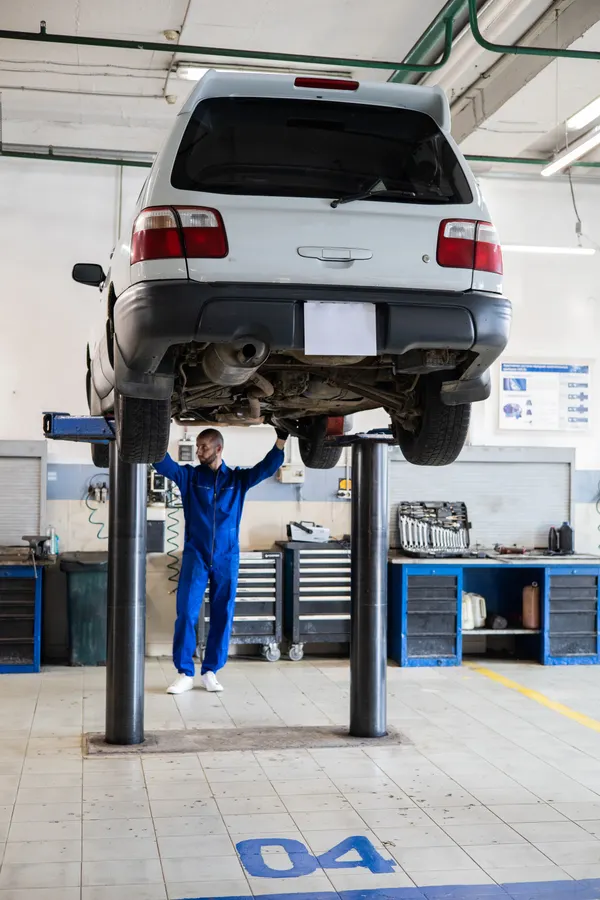
- Underneath and under the hood. Depending on the vehicle, the inspector checks exhaust, suspension components, and fluid leaks that create a safety hazard.
- Emissions, where required. The inspector connects to the onboard computer to check for fault codes and readiness, and may inspect emissions components for presence and connection.
- Result and next step. A pass is transmitted electronically so you can renew. A fail comes with a list of what failed, and you have a defined retest window after repair.
What fails most often
The most common failures are unglamorous: a brake light out, tires worn past the tread limit, wipers that smear instead of clear, and a check engine light on in an emissions county. None of these should surprise you on inspection day. Walk around the car the night before with a helper. Have them stand behind while you press the brake and use each signal. Look at tire tread across the full width, not just the outer edge, because alignment wear hides on the inside shoulder. Replace wiper blades that chatter. Small checks the night before prevent a wasted trip.
If the car fails, you are not starting over from zero. Keep the failure report, get the listed items repaired, and return for a re-inspection of the failed items within the state retest period. Ask how the retest is recorded so the pass reaches the registration system cleanly. Driving after a failure is allowed within the rules for getting the car repaired and retested, but an expired registration is still expired, so do not treat a failure slip as an extension for normal use around Rutherfordton.
How to make inspection day boring
Boring is the goal. Bring the car with the check engine light off and staying off, not cleared that morning. Arrive with tires properly inflated and any known bulb already replaced. If your car recently had battery or computer work, drive it normally for several days first so readiness monitors can complete. That single tip prevents one of the most frustrating emissions failures, where nothing is broken but the computer has not finished its self-tests yet.
Drivers in Rutherfordton who treat the inspection as a yearly safety review rather than a hurdle tend to spend less over time. The inspector is looking at the same tires, brakes, and lights you depend on every day on wet roads and grades. Catching a thin tire in the bay is better than discovering it in a summer thunderstorm on a dark road.
Common questions
How often is the NC inspection due?
Once a year, tied to your registration renewal. The vehicle must pass before the registration can be renewed, so schedule it before the renewal deadline.
What if my check engine light is on?
In an emissions county it will fail the emissions test. Have the fault diagnosed and repaired first, then drive normally so the monitors reset before testing.
Can I get reinspected after a failure?
Yes. Repair the items on the failure report and return within the state retest window for a recheck of the failed items.
Photos in this guide are representative stock images.
← All guides from Ellenburg's Garage← Back to Ellenburg's Garage