Timing belt or timing chain sounds like a trivia question until you learn what either one does. Both keep the crankshaft and camshaft turning in exact sync so valves open and close at the right moment relative to the pistons. When that sync is lost on many engines, pistons and valves occupy the same space, and the result is bent valves and a repair that dwarfs preventive service. The belt-versus-chain question is really a maintenance question: does your engine have a part with a replacement interval, or a part designed to last the life of the engine that still needs watching?
Drivers in Rutherfordton can work through the checklist below with an owner's manual and a service history. You do not need to open the engine. You need to identify what your engine uses, whether it is an interference design, and what the signs of wear look like for that system.
The basic difference
A timing belt is a reinforced rubber belt running outside the lubricated part of the engine, usually behind a cover. Rubber ages with heat, oil contamination, and time, so belts have both a mileage interval and a time limit in the manual. A timing chain is a metal chain running inside the engine in oil. Chains do not have a routine replacement interval on most engines, but they rely on tensioners and guides that wear, and they depend on clean oil at the correct level. A neglected chain system can stretch, rattle, and eventually jump timing.
Interference versus non-interference decides the stakes. In an interference engine, a belt or chain failure that lets valves and pistons collide causes internal damage. In a non-interference engine, the engine stops but usually avoids that collision. Most drivers do not know which design they own, which is exactly why the checklist starts with identification, not with symptoms.

Timing system checklist: work it in order
- Identify your system: check the manual for your exact engine, not just the model name, because the same model can use a belt in one engine and a chain in another. Pass: you know which one you have. Fail: you are guessing from the badge.
- Find the interval for belts: note both the mileage and the years in the manual. Pass: mileage and belt age are both inside the limit. Fail: either limit is passed, even if the car runs well.
- Check the history: look for a timing belt service record or a sticker in the engine bay. Pass: a dated record exists. Fail: no record on a used car near the interval, which means assume it is due.
- Listen cold for chains: a brief rattle on a cold start that fades can signal tensioner or guide wear. Pass: quiet, consistent starts. Fail: repeated rattle, especially with a check engine light for cam timing.
- Check the oil habit for chains: chains and tensioners live on oil pressure and cleanliness. Pass: oil changes on schedule with the correct oil. Fail: long gaps, low oil, or unknown history.
- Look for leaks near the cover: oil or coolant leaking onto a belt shortens its life. Pass: dry covers and stable fluid levels. Fail: active seep near the timing area on a belt engine.
What replacement actually involves
On a belt engine, the belt rarely travels alone. The water pump is often driven by the same belt and sits behind the same cover, and tensioners and idler pulleys have the same age as the belt. Replacing those parts while the engine is already open is standard practice because the labor to reach them is the major effort. Skipping a worn pump or tensioner to save a little now risks paying that labor twice. Ask any shop quoting belt work, including Ellenburg's Garage, to list exactly which components are included so you can compare quotes fairly.
On a chain engine, there is no scheduled swap to budget for, but there is a diagnostic path when symptoms appear. Cam timing codes, cold-start rattle, and metal debris in the oil are not watch-and-wait items on an interference engine. Early attention to a tensioner is a very different job from repairing an engine after the chain jumps.
The used-car rule
If you bought a used car with a belt and no proof of timing service, the safest assumption is that the service is due. Sellers forget, records vanish, and a belt gives almost no visible warning from outside its cover. That assumption feels harsh on a car that runs perfectly, but timing belts usually run perfectly until they do not. Factor the service into the purchase decision rather than discovering it afterward, and keep the record with the car for the next owner.
Common questions
How do I know if my car has a belt or a chain?
Check the owner's manual or look up your exact engine, not just the model. The same vehicle line can use a belt in one engine option and a chain in another.
Can a timing chain last the life of the engine?
That is the design intent on most chain engines, provided oil is clean and changed on schedule. Tensioners and guides can still wear and need attention if symptoms appear.
What happens if a timing belt breaks?
The engine stops immediately. On an interference engine, pistons can strike valves and cause major internal damage, which is why preventive replacement matters.
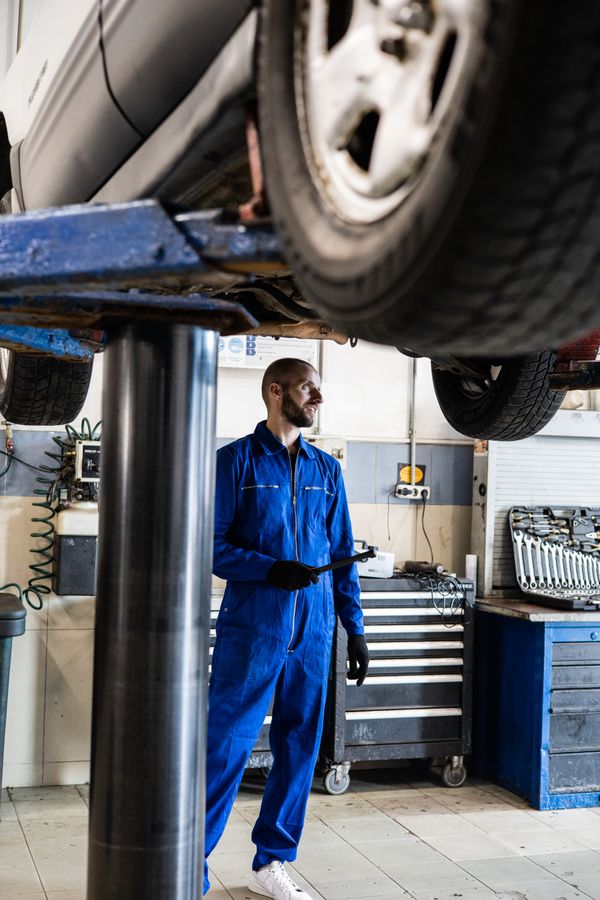
Photos in this guide are representative stock images.
← All guides from Ellenburg's Garage← Back to Ellenburg's Garage